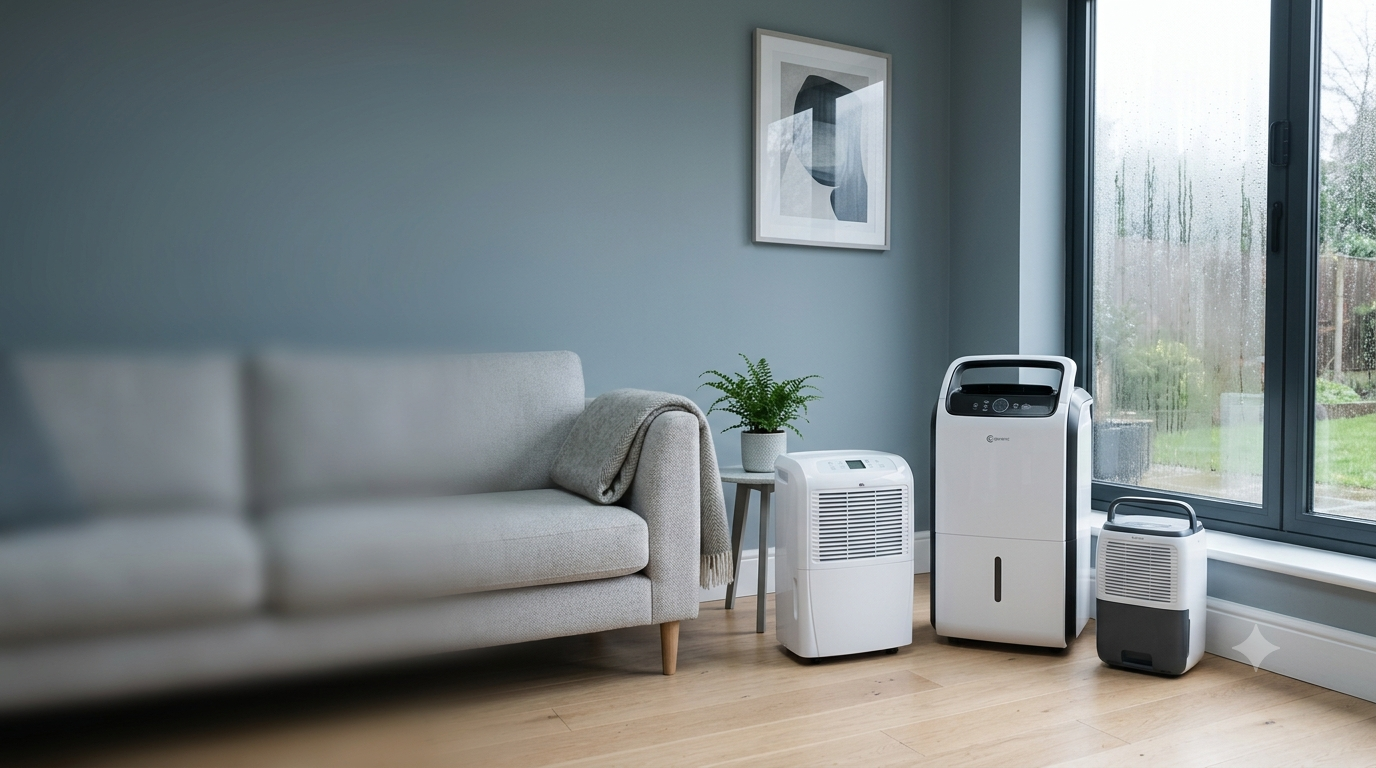
The best dehumidifiers for UK homes in 2026
Compare dehumidifiers by capacity, running cost, noise and the room they are meant for. Independent, spec-based verdicts for British damp, condensation and mould.
4.5/5 average score of our reviews
Independent. No brand pays for its ranking.
The method
Which dehumidifier should you choose?
Four ways to narrow it down, in the order most UK buyers ask the question.
Models analysed
Our latest dehumidifier reviews
Every model is compared on the criteria that matter: overall score, capacity, strengths and weaknesses.

Meaco MeacoDry Arete Two 20L
The best all-round dehumidifier for a UK home battling condensation, damp or slow-drying laundry. If budget allows, this is the one we'd buy first.

Meaco MeacoDry Arete One 12L
The best dehumidifier for a bedroom or a flat — quiet enough to sleep next to, backed by the same 5-year warranty as Meaco's bigger models, at a noticeably lower price.

Pro Breeze 20L OmniDry WiFi Dehumidifier
The best value 20L dehumidifier for drying laundry and general damp control — a genuine Which? Best Buy winner that undercuts the Meaco Arete Two on price without giving up much capability.

Pro Breeze 500ml Premium Mini Dehumidifier
The best budget dehumidifier for a small bathroom, wardrobe or caravan — not a replacement for a full-size unit, but excellent value for light, localised condensation control.

Ebac 2650E 18 Litre Dehumidifier with Air Purification and Laundry Mode
The dehumidifier to buy if you specifically want a British-made unit built to last well over a decade, and don't mind paying a premium and giving up app control to get it.

Pro Breeze 12L/Day Dehumidifier with Automatic Humidity Sensor
The best-value small-to-mid dehumidifier on Amazon.co.uk — a genuine Which? Best Buy winner with an unusually large, consistently positive review base, at a price well below the equivalent 20L models on this site.
Browse by need
Our reviews and comparisons by need
Brand
Meaco Dehumidifier
See the comparison →
Brand
Pro Breeze Dehumidifier
See the comparison →
Type
Best Dehumidifier UK
See the comparison →
Brand
Ebac Dehumidifier
See the comparison →
Room
Best Dehumidifier for Bedroom
See the comparison →
Type
Best Large Dehumidifier UK (20L+)
See the comparison →
Type
Best Dehumidifier for Drying Clothes
See the comparison →
Type
Best Dehumidifier for Mould and Damp
See the comparison →
Our guides
Our guides and advice for choosing well
Guide
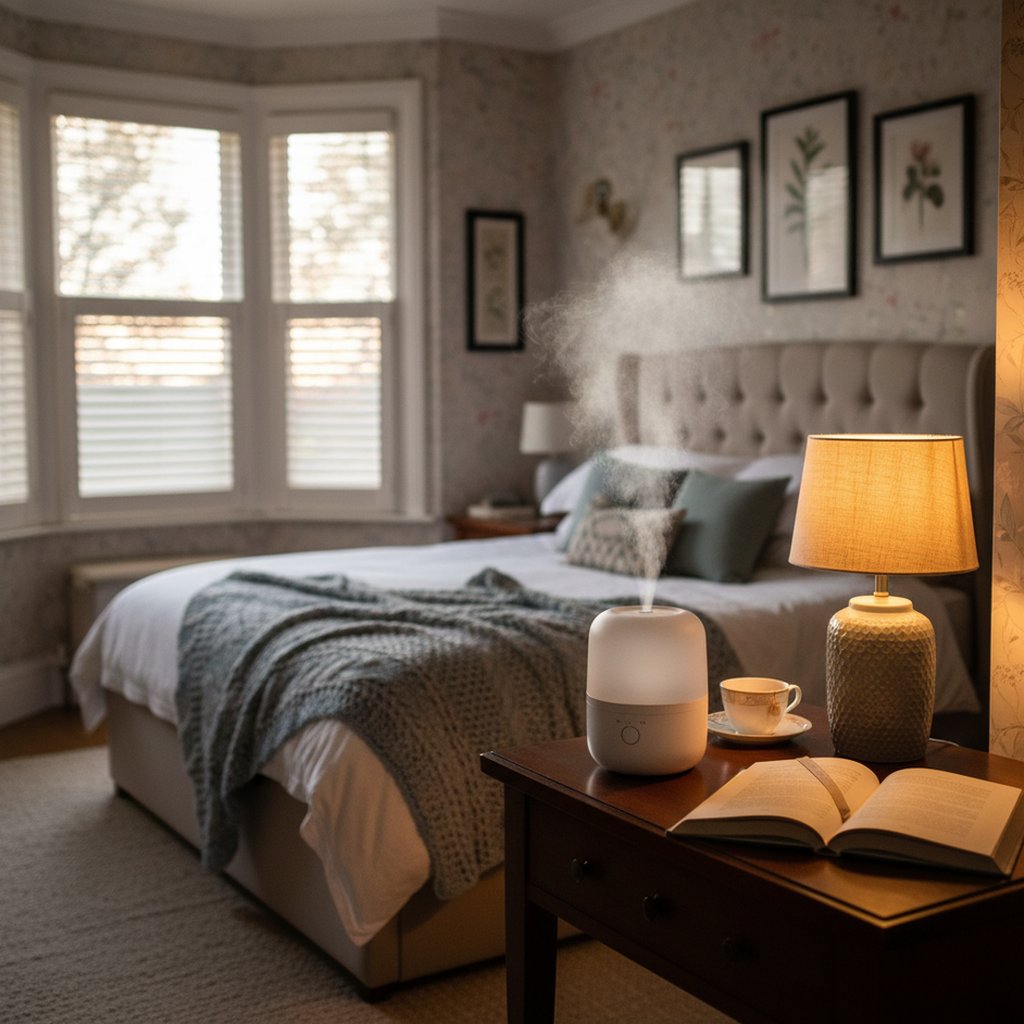
Dehumidifier vs Humidifier vs Air Purifier: What's the Difference?
Read the guide →
Guide
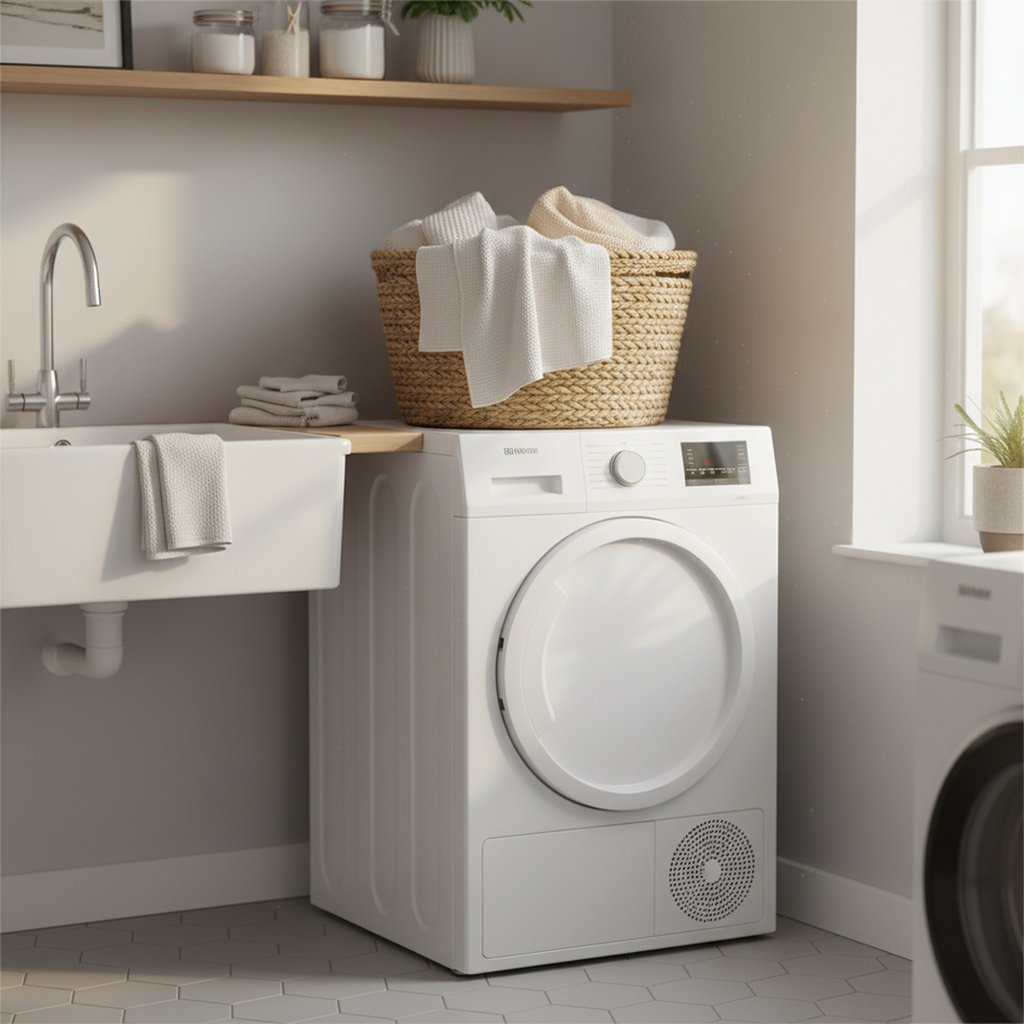
Dehumidifier vs Tumble Dryer for Drying Clothes: Which Is Cheaper?
Read the guide →
Guide
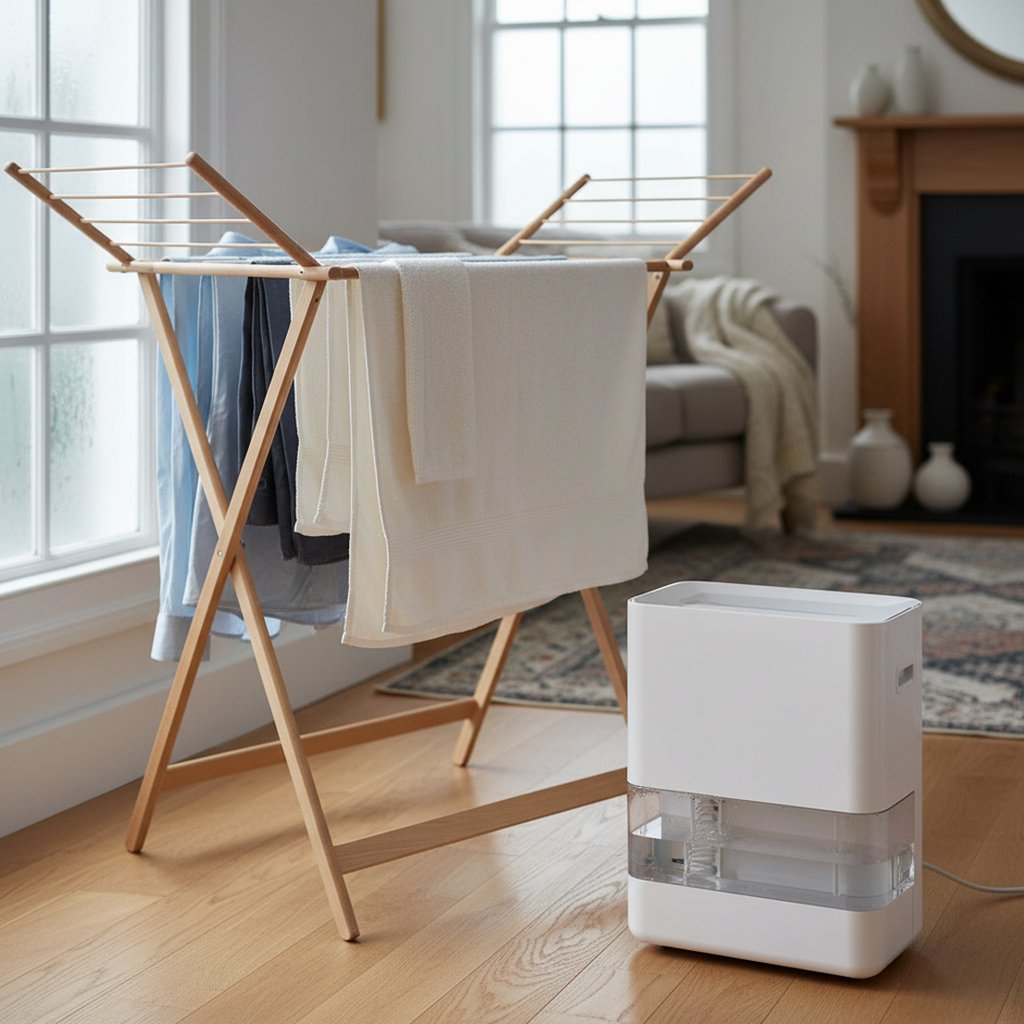
How Long Does a Dehumidifier Take to Work?
Read the guide →
Guide
Dehumidifier Running Cost: What It Really Costs Per Day, Week and Month
Read the guide →
Guide
Where to Put a Dehumidifier: The Best Spot in Every Room
Read the guide →
Guide
Desiccant vs Compressor Dehumidifier: Which Type Do You Need?
Read the guide →
Our favourites
Top-rated dehumidifiers right now
Pro Breeze 12L/Day Dehumidifier with Automatic Humidity Sensor
The best-value small-to-mid dehumidifier on Amazon.co.uk — a genuine Which? Best Buy winner with an unusually large, consistently positive review base, at a price well below the equivalent 20L models on this site.

Meaco DD8L Desiccant Dehumidifier
The Meaco to buy for a cold, unheated space — a conservatory, garage, boat or caravan — where a compressor unit like the Arete range loses effectiveness. Noticeably better reviewed than Meaco's own DD8L Pro, at a lower price.

EcoAir DD1 Simple MK3 Desiccant Dehumidifier
The dehumidifier to buy specifically for a cold garage, shed, caravan or unheated outbuilding where compressor models lose their edge — not our first pick for a warm living room, where a compressor unit is more efficient.
Find the right dehumidifier for your problem
Answer four quick questions about your room and we'll recommend the right capacity and the best-matching models from our comparison.
Step 1 of 4
Where do you need to tackle damp?
Pick a room — we'll pre-fill the rest for you.
Want the full checklist? Read how to buy a dehumidifier →
What is a dehumidifier, and do you actually need one?
A dehumidifier is a small home appliance that pulls excess moisture out of the air and collects it in a tank you empty by hand, or drains it away continuously through a hose. Most models sold in the UK work like a mini fridge: a fan draws humid air over a cold coil, the moisture condenses on the coil the same way it fogs up a cold glass on a warm day, and the resulting water drips down into the collection tank while drier air is blown back out into the room. That's the whole mechanism — there's no chemical, no filter to replace on most models, and nothing more complicated than plugging it in, setting a target humidity, and emptying the tank when it's full.
What it's actually for: stopping condensation on windows, black mould in corners and on sealant, that persistent musty smell, damp patches on walls, and clothes that never quite dry when hung indoors. All of these get worse as indoor humidity rises above roughly 60%, and a dehumidifier is the most direct way to bring that number back down to a comfortable, mould-resistant 40-50% without opening a window and losing all your heating in the process.
Where and when to use one: a bedroom or bathroom that steams up and stays damp after a shower, a living room where washing is dried on radiators or an airer, a cellar, cold garage or static caravan that smells musty every winter, or an older solid-brick house with no cavity insulation that struggles with condensation as soon as the heating goes off overnight. Renters in particular reach for a dehumidifier first because it plugs into a normal socket and needs no fitting, drilling or landlord permission — unlike extractor fans or ventilation upgrades.
Is it hard to use? No. There's no plumbing and no ductwork: you take it out of the box, stand it on a flat surface away from walls and furniture, plug it in, and most models start working in automatic mode straight away with no settings to configure. The main ongoing task is emptying the tank every day or two when it's working hard, or connecting the included drainage hose to a nearby sink or drain so you never have to. See the guide by room and problem below to find the right size for your specific situation.
26
models compared in detail
100%
independent — no brand pays for its ranking
2026
the year of our latest comparison update
We compare official manufacturer specifications against genuine customer reviews and independent testing bodies like Which? where an award exists — see our About page for how we work and who's behind every review.
How to choose the right dehumidifier
A dehumidifier looks simple on paper — a motor, a tank, a plug — but the gap between a cheap mini unit and the right compressor model for your room is huge, and it rarely shows up on the product listing. This guide covers the decisions that actually matter, in the order most UK buyers ask them.
Compressor or desiccant — which do you need?
Almost every dehumidifier sold in the UK for home use is a compressor model — it works like a mini fridge, pulling air over a cold coil so moisture condenses out of it. Compressors are among the cheapest models to run and this is what you want for any normally heated room: a bedroom, living room, kitchen or bathroom. The catch is efficiency drops sharply below around 10-15°C, because the coil struggles to get cold enough relative to the air. For a cold garage, unheated loft or static caravan over winter, a desiccant dehumidifier — which uses an absorbent material instead of a cold coil — keeps working regardless of temperature, at the cost of a higher running cost and slightly more noise. Unless you specifically have a cold, unheated space to deal with, a compressor model like the Meaco Arete Two 20L is the right starting point for the vast majority of UK homes.
What size dehumidifier for your room
Dehumidifier capacity is measured in litres extracted per 24 hours, and sizing it correctly matters more than any other decision — an undersized unit will run constantly at full power and still struggle, which is also noisier and more expensive to run than a correctly sized one working in short bursts. For a single bedroom or flat, a 10-12L/day model is normally enough — see the Meaco Arete One 12L. For a 3-5 bedroom house, or any household that regularly dries laundry indoors, step up to a 20L/day unit. Larger or particularly damp Victorian and Edwardian properties — solid brick walls, no cavity insulation — often benefit from 25L+ models. For a small bathroom, wardrobe or caravan, a compressor unit is usually overkill — a compact Peltier model in the 250-500ml/day range, like the Pro Breeze 500ml, does the job at a fraction of the price and noise.
Running costs: what it actually costs to run one
Dehumidifiers are cheap to run compared with most home appliances, but the gap between models is real. A 20L compressor unit like the Meaco Arete Two draws more power than a 12L model like the Arete One, so its hourly cost is higher. Work it out from the wattage and your tariff. Running cost depends heavily on the mode: Smart Humidity mode, which switches the unit off once it hits your target and only checks periodically rather than running continuously, cuts the cost compared with leaving a unit on Continuous mode 24/7. Mini Peltier units cost very little per hour but extract a fraction of the moisture, so per litre of water actually removed, a correctly sized compressor unit is usually the cheaper option overall — it's just cheaper per hour to run a small unit that isn't doing much.
Meaco vs Pro Breeze vs the rest
Meacois the dehumidifier brand UK buyers and reviewers (Telegraph, Ideal Home, Reddit's r/AskUK) point to first, and it's the only major brand offering a 5-year parts-and-labour warranty as standard across its Arete range — a strong signal of confidence in long-term reliability. Pro Breeze is the strongest value alternative: several of its models, including the 20L OmniDry, carry a Which? Best Buy award and undercut Meaco on price for comparable extraction rates, but only offer a 1-year warranty. Beyond these two, EcoAir, Ebac and De'Longhi all show up regularly in independent UK testing — Ebac in particular is a British manufacturer with a long history in this category. Own-brand and budget models from Argos, Currys or unbranded Amazon listings can be significantly cheaper upfront, but tend to have shorter warranties and less consistent long-term reliability based on the pattern of customer reviews across this category.
Drying laundry indoors without a tumble dryer
This is one of the most common reasons UK buyers search for a dehumidifier, and for good reason: a compressor unit with a dedicated laundry modedries a full airer of washing in around 4-6 hours, versus a full day or more of passive air-drying — and unlike a tumble dryer, it also dehumidifies the rest of the room at the same time, so it doesn't just move the moisture problem from your clothes to your walls. A laundry cycle costs a fraction of an equivalent tumble dryer cycle on a standard UK tariff, based on the wattage of each appliance. See our full comparison of the best dehumidifiers for drying clothes for the models that perform best at this specific job.
Tackling mould, damp and condensation
Condensation on windows, black mould spots in corners and a persistent musty smell are all symptoms of indoor humidity sitting above the level your home can safely handle — UK health guidance treats 50% as the ceiling above which mould growth accelerates. A dehumidifier is genuinely effective at preventingthis by keeping humidity below that threshold, but it won't remove mould that's already established on a wall — that needs a mould treatment spray and, ideally, fixing the underlying ventilation or insulation issue. For active damp problems, prioritise extraction rate over every other spec: see our dedicated dehumidifier for mould and damp comparison.
Dehumidifier vs air conditioner and humidifier
A dehumidifier is often confused with an air conditioner because both pull warm, humid air over a cold coil and both produce condensate, but they are built for different jobs. An air conditioner is sized to lower the air temperature, with moisture removal as a side effect. A dehumidifier is sized purely for humidity control, so it can run in a cool room without making it uncomfortably cold. A humidifier does the opposite job: it adds moisture to dry air, which can matter in a centrally heated home in winter.
A dehumidifier lowers humidity, which indirectly improves air quality by starving dust mites and mould of the moisture they need, but it is not an air purifier. If allergies or asthma are the main concern, pair it with a HEPA filter, built into models like the Meaco Arete Two. A cheap plug-in hygrometer left in the room for a few days is the easiest way to check whether your humidity justifies buying a dehumidifier at all.
The controls differ too. A thermostat switches heating or cooling on and off based on temperature, while the humidistat built into every dehumidifier on this site does the same job based on humidity. Many US-market models measure capacity in pints and are rarely sold new in the UK, which is why this site focuses on the litres-per-day brands UK retailers actually stock: Meaco, Pro Breeze, EcoAir and Ebac.
What you get at each budget tier
At the entry level, you're buying a mini Peltier unit — silent and cheap to run, but limited to 250-500ml/day, fine for a small bathroom or wardrobe and nothing more. In the mid-rangeis where proper 12-20L compressor units live, including both the Meaco Arete One and Pro Breeze's mid-range models — this is the sweet spot for most UK homes. At the premium end, you're paying for Meaco's 20L Arete Two with its 5-year warranty, HEPA air purification and the quietest operation in its class, or larger 25L+ units for bigger or more severely damp properties. See our best budget dehumidifiers if upfront cost is the main constraint — just know what that budget can and can't solve before you buy.
Frequently asked questions
What size dehumidifier do I need for a UK home?+
As a rule of thumb: 10-12L/day for a flat or 1-3 bedroom house used in a single room, 20L/day for a 3-5 bedroom house or if you dry laundry indoors regularly, and 25L+ for larger or particularly damp properties.
Which is the best dehumidifier brand in the UK?+
Meaco is the brand UK reviewers point to first, backed by a 5-year warranty across its Arete range and a strong long-term reliability record. Pro Breeze is the best value alternative, with several Which? Best Buy awards at a lower price, but only a 1-year warranty.
Compressor or desiccant dehumidifier — which is better?+
Compressor units are cheaper to run and best for normal room temperatures (above roughly 15°C) — this covers most UK living spaces. Desiccant units cost more to run but keep working in cold, unheated spaces like garages, where a compressor loses most of its effectiveness below about 10°C.
What humidity level should I aim for?+
Most UK health guidance recommends keeping indoor humidity between 40-60%, with 50% as a comfortable target that discourages both dust mites and mould growth.
Does a dehumidifier cool a room?+
No — a dehumidifier removes moisture from the air but doesn't lower the room's temperature. Some models release a small amount of heat as a by-product of the compressor, which can make a room feel very slightly warmer, not cooler.
How much does it cost to run a dehumidifier in the UK?+
Running cost depends on the model and the mode. Check the wattage on the spec sheet and multiply by your tariff. In Smart Humidity mode a compressor unit switches off once your target is reached rather than running continuously, so regular winter use in one room costs far less than leaving it on all day.